
by Colleen Bidwill
When Priscilla Perry Heffelfinger and Gina Gabel moved with their families to Dhaka, Bangladesh, in 2012 for their husbands’ jobs in the U.S. Embassy, they were struck by the hunger and poverty they witnessed in the area. Reaching out to the community and searching for ways to help, a nearby school told them to bring food for their students.
“When we started delivering meals, there were kids who wouldn’t eat their food because they wanted to take it home to share with their families. And for us, I think that was a moment where we were like, this is hunger we’ve never seen before. If this is the level of hunger we’re working with, we can’t stop this,” Gabel said.
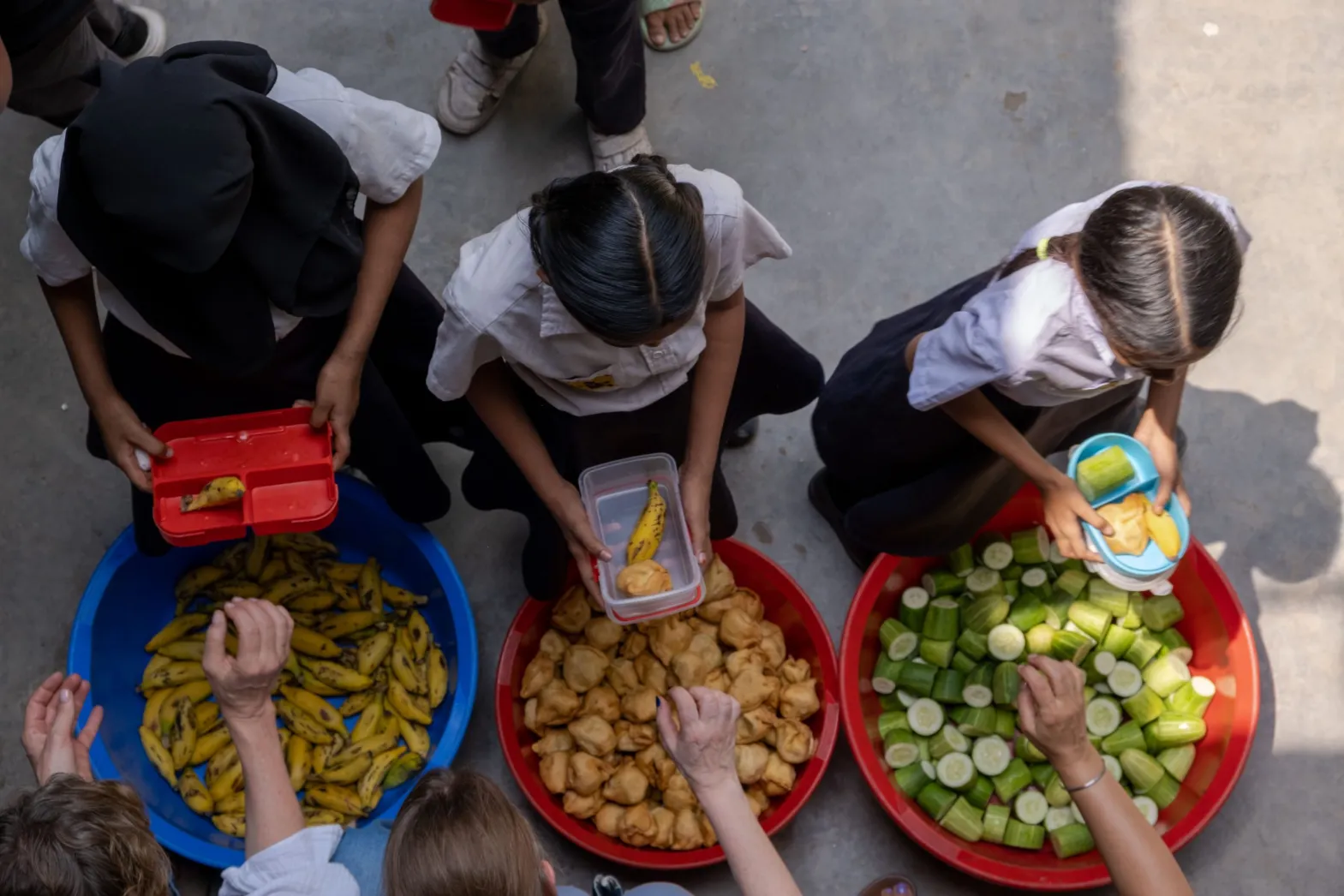
So, they didn’t stop and slowly but surely kept growing and partnering with more schools. Now, through their nonprofit Thrive, they’ve delivered more than 5 million nutrient-dense meals to children in Bangladesh and the Philippines, where Heffelfinger moved with her family for a time before returning stateside to Inverness.
“We’ve delivered through political unrest, terrorist attacks and COVID, but there’s no way that could have happened without our strong local team there,” said Gabel, who now lives in Michigan. “How it grew and continues to grow is through the communities.”
“There was no big business plan or game plan. It was just (that) we saw a need, we raised our hands and we had no idea we’d be doing it now, 13 years later,” said Heffelfinger, who serves as the nonprofit’s executive director.
Through their efforts they’ve seen higher attendance rates at their partner schools than national averages and the trickle-down effects into the communities at large.
“We’re seeing that not only are we giving kids the health and the food that they need, but then they’re getting the education that they deserve. We’ve seen many of these kids grow up, and we’ll see them go into higher education and become teachers and doctors. One girl is a makeup artist, and another girl is a journalist. When they got the opportunity of an education, their world really grew and their opportunities grew alongside that,” Heffelfinger said.
Gabel, who used to teach in inner-city Detroit, saw that when “kids aren’t getting food, they’re not learning up to their potential.” She now works with kids in the Detroit area to help pitch the nonprofit to rotaries, churches and other organizations.
“Kids get it. Like, if I were hungry, I couldn’t imagine going to school or riding my bike or doing all the things that I do,” she said.
While Heffelfinger, who has been in the development sector for more than 20 years, and Gabel, who has degrees in special education and elementary education, carry these experiences into Thrive, they feel that being mothers shapes their work more. Gabel has three kids, and Heffelfinger has four.
“In Bangladesh, we met so many moms who couldn’t afford to feed their kids. That was really heartbreaking for us … and we had the ability to like do something about it, which I think we both take as like if you have the ability to do it, there’s a responsibility to do it too,” Heffelfinger said.
“The overarching piece is that we just always go back to what we would want for our kids. That’s why we’ve always really focused on nutrition and why we always focus on serving food every day, because we wouldn’t want our kids to miss a day. We wouldn’t want their kids not to have the best food they could have that day.